For employers
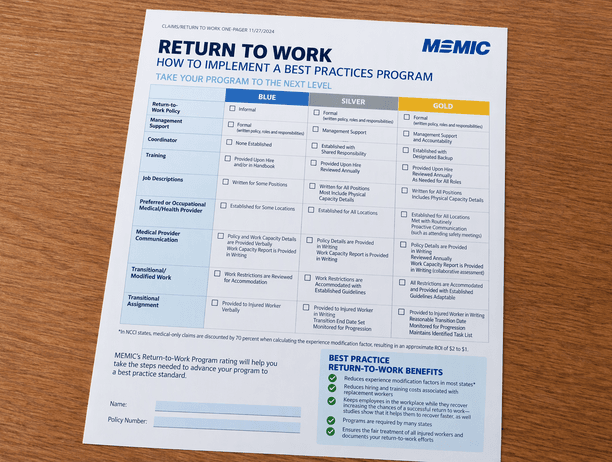
Return-to-work plans
Support employee recovery and a successful return to work with a structured return-to-work plan.
What is a return-to-work plan?
A return-to-work plan helps employees safely transition back to work following a workplace injury or illness. The plan identifies meaningful work that aligns with an employee's current abilities while supporting recovery and continued engagement in the workplace.
You may hear return-to-work plans referred to as transitional work plans, modified duty plans, alternate duty plans, or light-duty assignments. While terminology varies, the goal remains the same: helping employees stay connected to work while progressing toward their regular job responsibilities.
A well-designed return-to-work plan benefits both employees and employers by supporting recovery, reducing disruptions, and retaining valuable experience and expertise.
Getting started
7 steps to build an effective return-to-work plan
A successful plan combines preparation, communication, and flexibility. These steps can help you create a process that supports employees while meeting operational needs.
- 1
Understand the benefits
Return-to-work planning can help reduce claim-related costs, maintain workplace continuity, and support positive recovery outcomes.
- 2
Build leadership support
Leadership commitment is essential. Ensure managers and supervisors understand the importance of supporting employees throughout the recovery process.
- 3
Create a written policy
Document your organization's commitment, expectations, responsibilities, and approach to return-to-work planning.
- 4
Establish a clear process
Define how workplace injuries will be managed, how plans will be developed, and who is responsible for each step.
- 5
Communicate with stakeholders
Keep employees, supervisors, healthcare providers, claims professionals, and MEMIC informed throughout the process.
- 6
Identify meaningful work opportunities
Consider tasks, projects, or adjusted responsibilities that match an employee's current capabilities while supporting business needs.
- 7
Review and improve
Evaluate outcomes, gather feedback, and refine your approach to strengthen future return-to-work planning efforts.
Why it matters
Supporting recovery through meaningful work
Work plays an important role in recovery. A return-to-work plan helps employees remain connected to the workplace, maintain confidence, and continue contributing while recovering from an injury.
For employers, return-to-work planning helps maintain productivity, reduce the costs associated with lost work time, and support employee retention.
Watch how a thoughtful return-to-work approach can create positive outcomes for employees and employers alike.
- Supports employee recovery and workplace connection
- Encourages a successful return to regular work
- Helps reduce the impact of lost work time
- Retains valuable workforce knowledge and experience
Build a safer workplace
More resources for your workplace
Explore workplace safety resources, tools and expert guidance to help protect your employees, reduce risk and strengthen safety across your organization.